A tale of two kidneys

You know how in movies sometimes a devil and angel sit on the protagonist’s shoulders? I, too, have good and evil tempting me these days. Except my devil and angel are my kidneys.

My bad kidney, the one that hoards stones, chides me every waking hour, “You can’t work; you’re in pain. Go back to bed and never drink water again.”

Good Kidney reassures me, “Don’t worry, you still have me.”

I tell Good Kidney that doesn’t really help the pain. Or the fact that I need surgery and a stent shoved up my pee hole.

Good Kidney retorts, “At least, you don’t have a penis.”

I can’t argue with that. So, I carry on and I ignore Bad Kidney.

However, on Monday, Good Kidney suddenly whimpered, “I don’t feel so good. We should go to the ER.”

I considered ignoring both kidneys, but the internet told me that doesn’t usually turn out well. By the time I got to the ER, Good Kidney was crying, Bad Kidney was screaming, and I was asking for a wheelchair.

The nurse offered pain medication, and I initially refused for fear of a mast cell reaction. However, Bad Kidney was insistent, “Pain meds! Pain meds! Now, now, now!”

So the nurse came back with Diluadid. I’ve had it before, also for kidney stones, but I couldn’t remember how it felt. (That’s probably because I was passing a 5mm stone and blacked out.) As soon as the nurse pushed the medicine, pressure rushed through my body, filling me like an overinflated balloon.

I braced for anaphylaxis, certain my mast cells had been activated. Nothing. I am led to believe my mast cells are Team Bad Kidney.

I tried to relax, despite the overwhelming desire to burst out of my skin. I took a deep breath. I wondered if this is how gingerbread men feel when they are cut with a cookie cutter? Do they mourn their leftover body on the cookie sheet?

Are we all one big cookie?

The medication wasn’t worth the hangover. I could still feel Bad Kidney, although it was more tolerable. The doctor recommended surgery sooner. Feeling defeated, I left the ER, made cookies (?!), and went to bed.


A sad day for Minnesota mast cells

Today, I lose my mast cell care team. My MCAS specialist is moving across the country. This is upsetting, but not unexpected. I knew I was extremely lucky to have easy access to (arguably) the world’s best MCAS doctor. I was grateful for every minute of care I received. He truly saved my life.

This is what I did not expect:
  • The university did not notify me, cancel my appointments, refill my prescriptions, or recommend new doctors until eight days ago – after I contacted them. They knew my doctor was leaving in May.
  • I found out on Facebook that my physician assistant, who has treated me for two years and has a valuable understanding of MCAS, is no longer allowed to see me, because…
  • The university will no longer treat MCAS.
I also did not expect:
  • Fellow MCAS patients to call Minnesota MCAS patients “whiners” for sharing their concerns about losing their care.
  • Fellow MCAS patients to accuse me of “doctor bashing” for expressing my outrage at the university’s mismanagement.

Amidst this turmoil, my kidney pain continued to gnaw at my body. I called the university, almost in tears, asking where I was supposed to get help. They recommended two allergists. I asked if they were kidding. I told them I’ll likely end up in the ER. So they offered me a final appointment with my MCAS doctor the following day.

My doctor and I discussed my pain, my kidney stones, and the possibility of kidney disease. I was stunned. On one hand, MCAS may be destroying my organs, and on the other, the university doesn’t believe my disease is serious enough to provide continuity of care. My doctor recommended I follow up with a urologist about surgery.

And then we said goodbye. I tried to maintain my professional composure while expressing my utter gratitude. I told him I am excited for him to advance MCAS education and research. His final notes in my chart read, “I thanked her for the privilege of having been involved in her care, and she thanked me for the care I’ve provided.”

For now, I am putting the turmoil aside. My kidney demands my full attention. I’m preparing for a painful surgery, gathering documents and praying the doctors will adhere to the mast cell protocol.

“What’s the disease called?” my new urologist asked.

“Mast cell activation syndrome,” I said slowly, as he wrote it down.

Doodling is easy, right?

Lately, I’ve found comfort and inspiration in doodles. These are my favorites on Twitter:

After finishing a delightful Sarah’s Scribbles book, I decided doodling would become my new hobby. Doodling will give me joy and purpose! I will spread laughter and cheer!

So I watched a few YouTube videos on Adobe Illustrator. I can totally do this!

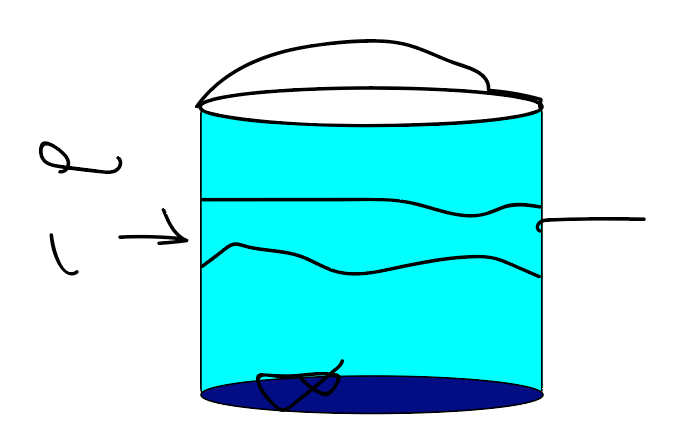
I realized I could make an amazing infographic to help explain The Histamine Bucket metaphor for mast cell disease. I’ll doodle an infographic that is so informative that everyone in the world will understand MCAS!

I opened my laptop and got to work. I love new projects!

A hour passed. THIS PROGRAM DOESN’T MAKE ANY SENSE!

 The result:

First doodle

I don’t think I’ll be educating the world about MCAS by doodles any time soon. That squiggle in the upper left is just spite.

But I didn’t give up. Because failing at doodling is embarrassing.

I figured out how to use the shape tool, but only the shape tool. I am a brilliant shape wizard!

The result:

Poodle doodle

That’s actually a fairly cute poodle. Unless you have a phobia of poodle and spider crossbreeds. 

 My quest for a new hobby continues.