I’m allergic to my own hormones

“Are you in pain today?” the nurse asks looking up from the computer screen.

“A four,” I say, anticipating her request to “rate the pain on a scale of 1-10.”

She reads the next question, “Do you feel safe at home?”

“Well, I live alone with my poodles, so yes… except when one of them farts and I think I’m going to die of asphyxiation,” I say, getting bored.

The nurse continues, “When was the last day of your first period?”

“2012,” I grin. This time I’m not joking.

“Are you on some kind of treatment?” the nurse asks.

I consider telling her I have a five-year-old fetus growing inside of me, but I’m too tired to explain what humor is. The truth is hard enough to believe anyway. “Yes. I’m allergic to my periods.”

She takes my blood pressure and then flees the room.

*****

Five years ago, I didn’t believe anyone could be allergic to their own hormones. How can you react to yourself? Doesn’t an allergic reaction entail hives and sneezing? I did, however, understand that hormone fluctuations could ruin a woman’s life.

I wish I had a heartwarmingly funny way of describing PMDD to you, but the truth is, it is one of my worst nightmares. As my hormones dropped every month, feelings of doom clouded my mind, while my body became heavy and exhausted. Like clockwork, I succumbed to a multi-day panic attack for no tangible reason. My mind suggested death as a better option, while I tried to pretend I was okay at work and around loved ones.

For twelve years, I sought relief from this torture. There was (and still is) no lab test to measure my suffering. I tried antidepressants, therapy, and supplements. My symptoms persisted as my fear of my body grew.

Finally, a compassionate midwife worked with me to trial hormone pills. One of my biggest pet peeve of all time: women calling all birth control pills “the pill.” Some birth control pills absolutely made my PMDD worse. We discovered after a short adjustment period my body did best on a low (not ultra-low) dose, monophasic pill taken continuously at the same time every day.

For me, no hormone fluctuations equaled no PMDD. The curse was over. Kinda.

*****

When I met my mast cell specialist several years later, he asked me to list my medications. I told him that I was on continuous hormones for PMDD.

“Premenstrual dysphoric disorder,” I explained. He nodded, knowingly. His familiarity was curious, so I added, “It was life-threatening.”

He nodded again, completely unfazed. Had he heard me correctly?

In my appointment, I learned PMDD can be a symptom of mast cell activation syndrome (MCAS). Normal hormone fluctuations can directly trigger mast cell reactions and many women with MCAS use medication to suppress hormone fluctuations. I also learned doom is a hallmark sign of a severe mast cell reaction. These days, when I’m anxious, I increase my antihistamines and/or reduce my exposure to mast cell triggers.

I experienced PMDD long before I experienced rashes or throat swelling. I often wonder if I could have accessed MCAS treatment sooner, at the onset of PMDD, I could have avoided worsening of my symptoms over time. While many women worry about “Aunt Flo coming to town,” I hope they are also aware of her connection to Anna, Phil, and Axis.

Update

I have successfully stopped taking hormone pills in MCAS remission in order to prioritize muscle growth. I had a normal period! As I approach perimenopause, I have realized how important a MCAS-aware gynecologist will be to protect my mast cells as my hormones inevitably fluctuate.

I have also been diagnosed with DHEA deficiency. Read more about my DHEA journey on Patreon. I hope someday researchers study the relationship between DHEA, PMDD, and MCAS!

Disclaimer

The number one rule of MCAS is: every patient is different. What works for my body may be dangerous for your body. Learn more about trial and error with MCAS.

As always, this is not medical advice. Please talk to your doctor about any concerns or questions you may have. Working with a MCAS specialist may be especially helpful.

Resources

Beware of vision boards

In January 2015, I was full of ambition. I had just finished a master’s degree, my city council campaign, and a cruise to the Bahamas. I was ready to carpe diem the shit out of the new year.

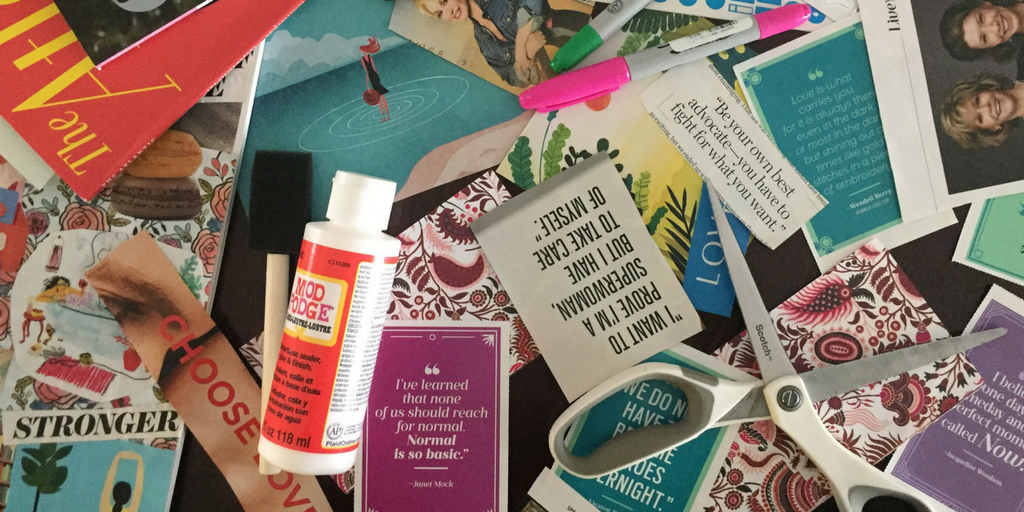
On TV, I heard a bestselling author tell Oprah how she attributed her success to a vision board. I wanted to publish a book. I wanted to meet Oprah. I wanted to use modge podge.

I riffled through magazines and scrapbook paper, selecting the quotes and colors that would best represent my future self. As I cut out my favorite images, I imagined the vacations I would take, and the memories I would make.

What else did I wanted to accomplish? What else should I accomplish?

I recalled my recent book club meeting. The average age of the group is 70, but they kindly adopted me. These ladies are everything but old. Over brunch, they shared their recent adventures: political activism, concerts in the park, and tours through other countries. I listened silently, counting the years until my retirement. The truth is I never could keep up with these ladies.

I don’t remember which books we talked about that day, but I’ll never forget when the hostess mentioned she did yoga every morning before her walk around the lake. And every morning, her routine included a headstand.

Now I’ve tried to learn how to do a headstand in yoga class, but I was thwarted by my fears of falling and farting. In the security of my own home, my dogs dodged my flailing limbs. The blood rushing to my head felt less cool without the company of hipsters. But now that I knew that a 70-something could do it, so should I.

I carefully cut out the silhouette of a woman standing perfectly on her head and added it to my vision board.

***

Unfortunately, my body had other plans that year. Three weeks later, my legs weakened and I fell down the stairs. I quit yoga, suspecting I had over done it, but as months passed, even walking became a challenge. I spent most of the year fighting to hold on to what I had, instead on building upon it. I tucked away my vision board, hoping to regain control of my life.

***

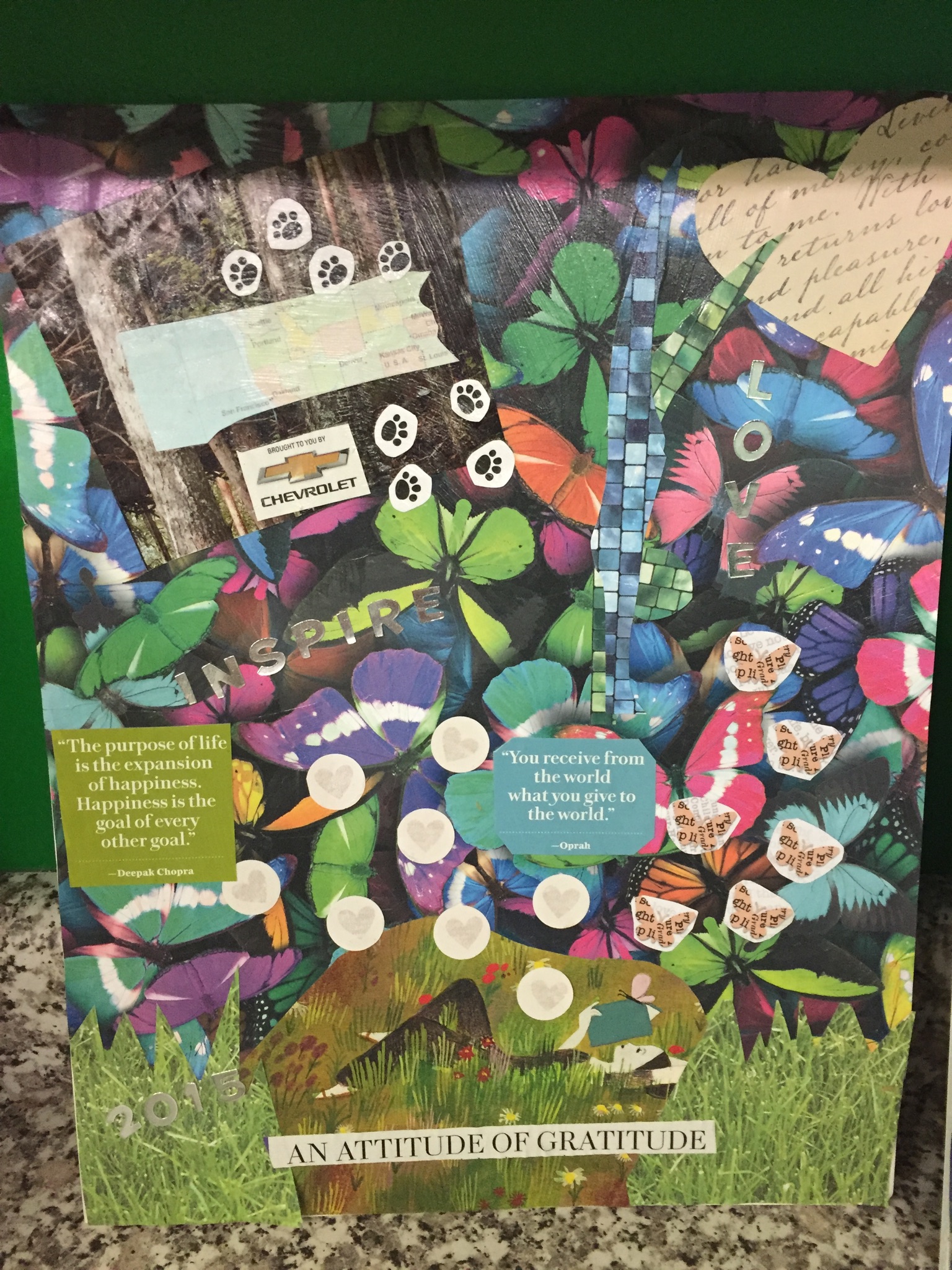
This January, I stumbled across my vision board once again. I picked up it hesitantly, not wanting to stir feelings of disappointment or grief. As I studied the images, I realized I had unintentionally accomplished most of my vision for that year. For example, I read a surprising number of books as a result being stuck on the couch. When I had been given a burst of prednisone, I drove wide-eyed across the entire state to visit parks with my dogs. It was a terrible year, but there were moments of resilience.

However, in the middle of the board, I sensed the woman in the headstand laughing at me.

Oh my god. I was that woman, I realized. My world turned upside down that year. I had learned to stand on my head. How the hell was I supposed to know vision boards could be interpreted as metaphors?

I modge podged a prophecy.

***

So this year, I made another vision board. Much. More. Carefully.

I probably should have glued pictures of money and the Nobel Peace Prize to the board, but I try to be reasonable with the universe.

This year’s vision board features images of self-care, a quote from Mr. Rogers, and zero crazy yoga poses. There is one image that may be misinterpreted for me turning into a marshmallow, but prednisone has already accomplished that.

IMG_5724
My 2015 vision board
IMG_5723
My 2018 vision board

My mast cells put me in the hospital

“I’m scared and alone and I need you to tell me everything will be okay,” I texted my best friend.

Thirty minutes ago, I was insisting to be admitted. After two rounds of mast cell induced ureteral obstruction, I refused to experience the worst pain of my life again. Pills weren’t enough; I needed continuous IV medications, I told the ER doctor. So they admitted me to the neurology floor.

But maybe this was a bad idea? I looked down at my IV and then the door. I can outrun them, right?

I had been admitted to the hospital once before. Similarly, it was midnight, I was alone, and my ureter was obstructed (that time by a 6mm kidney stone). In fact, I was in another state attending a work conference. My mom offered to fly down, but I declined. I found solace in the quiet room.

So why was I terrified of hospitalization this time?

Because this time I knew I had mast cell disease. This time, I knew my doctors would not know how to help me. This time, I needed to educate and convince my care team to listen to me. This time, I knew any treatment was a gamble.

The admission process made me feel like a criminal entering jail. The hallways were empty and the rooms were dark. The head nurse searched my belongings and confiscated my pill bottles. I pleaded to keep my medications, explaining I had to use specific manufacturers or else I risked another reaction. Why do they need to lock up my antihistamines? If they don’t trust me with my own medications, how will they trust me about treating my disease? I began to cry. The nurse promised to deliver my morning doses on time.

Next came the doctor, a neurologist. He asked me what pain medications I could tolerate. I replied oxycodone and fentanyl. He told me they don’t administer fentanyl on the 7th floor. He suggested morphine and I began to hyperventilate. Why am I on this floor if they can’t give me the medication I might need?! I told him morphine will kill me and fentanyl is the only medication for extreme pain that I am sure is safe. I had tried other pain medications that week and lost my vision for two days. In the ER, two doses of fentanyl only reduced my pain to level 8 on the pain scale.

The doctor agreed to continuous IV Benadryl and oxycodone (luckily my pain was more manageable at this point). The nurse left the room and my friend who brought me to the ER said goodbye. I looked out the window to regain my bearings, but my city was unrecognizable in the darkness, and began to lose my shit.

You should know, mast cell reactions also can induce a sense of doom. The doom fogs all logic and invites fear to fill every thought. This chorus of fears echoed in my head:

  • I am going to die.
  • They are going to deny me my medicine and I am going to suffer. And then I am going to die.
  • I am going survive, but my hospital bills will be unsurmountable and I will lose my home. I will be homeless. And then I will die.
  • I am never going to have children and I am going to die alone even if it takes me awhile to die.
  • I am never going to feel joy again.

The nurse returned and asked me if I needed anything.

“I’m scared,” I squeaked.

The nurse walked over to my bedside and I began babbling how scary mast cell disease can be. She said she had never heard of MCAS, so I explained my triggers and daily challenges. The nurse listened patiently for over fifteen minutes and I felt better.

As she left the room, she said, “I won’t put the bed alarm on.” Way to ruin a moment.

I didn’t sleep at all. Pain medicine and Benadryl give me insomnia. I took black and white selfies of my tear-stained face and wrote lines for a melodrama I creatively titled “Girl in the Hospital.”

My anxiety subsided as the sun rose. I hadn’t had a reaction. I didn’t need Fentanyl. I hadn’t ripped out my IV and ran. I survived my night in my hospital with mast cell disease.