Why I only write when I feel like it

“Write every day” is common advice pounded into aspiring writers’ heads. If not every day, writers are encouraged to schedule writing time and stick to weekly routines. The purpose is to train your creative brain to produce a steady stream of writing regardless of inspiration.

I love routines. My perfect morning starts with making my bed, a chai latte, and breakfast for my poodles followed by twenty minutes of reading and a leisurely shower. I love how routines minimize decision making and ensure I focus on my priorities.

However, a routine is a luxury not everyone can sustain. My body is unreliable. My health changes from hour to hour without warning. It does not abide by any clock or calendar, no matter how hard I try to bribe it. As a disabled and chronically ill person, I have given up on routines.

When I first got sick, I thought if I followed a strict routine, I would feel better. I created a conservative schedule of medications, healthy meals, exercise, and sleep. I tried to follow it every day and every day I failed. My routine was destroyed by bouts of dizziness, midday vomiting, and nighttime muscle spasms. Instead of feeling better, I felt worse as I clung to my schedule and ignored my body’s demands.

Five minutes of writing a day may seem like an easy commitment (I have tried it!), but some days I can barely walk or shower. Some days I must choose between eating and resting. Some days brain fog robs me of my words. On a bad day, I don’t need the added disappointment and guilt of a writing routine I can’t maintain.

I am not less of a writer, because I can’t write every day. In fact, my experience with chronic illness and disability enriches my writing. Furthermore, I love writing and doing what I love, at my own pace, is healing. In the end, writing when I feel like it helps me feel like writing much more often.

4 tips for writers with chronic illness (and everyone else)

1.  Set realistic, meaningful goals
I have less energy than most people, so I must choose my goals carefully. A near death experience incited my desire to launch blog. I cannot blog every day or every week, but I strive to post every two weeks. I remind myself that the quality of my posts matters more to me than the quantity. I also decided not to monetize my blog in order to save my energy for writing.

2. Write when you feel good, wherever that may be
Inspiration is extremely elusive when you feel like crap most of the time, so I make every effort to capture it. I’ve trained myself to jot every idea into my phone no matter what I’m doing. I dictated half of this blog post into my phone while sitting in traffic. Notes and outlines help me write when I feel good, but I’m not inspired. I always bring these with me to my medical appointments, where I spend a lot of time waiting.

3. Enjoy less taxing, creative activities when you don’t feel good
I’ve learned how to enjoy myself when my brain feels like mush. Podcasts, books, movies, and coloring are low-energy activities that can be great distractions, while stimulating creativity. You totally have my permission to binge on Netflix. I also recommend networking with other writers on social media. Networking can be as simple as liking someone’s posts and sending goofy memes. The chronic illness and disabled writing communities are awesome.

4. Be kind to yourself
Your body is not the enemy. When I’m unable to meet my goals due to my health, I acknowledge that I’ve been busy trying to stay alive. There is no writing pace that guarantees success, but you do need be alive in order to write. Fighting your own body and criticizing your limitations is not productive. Self-care will make you a better writer.

I did a thing

Do you ever get a strong urge to go somewhere or do something totally out of the ordinary? There’s no apparent explanation for it, but you MUST do the thing.

As soon as the snow melted, I NEEDED to go canoeing. I NEEDED to leave the city and paddle down a river lined with tall, green trees.

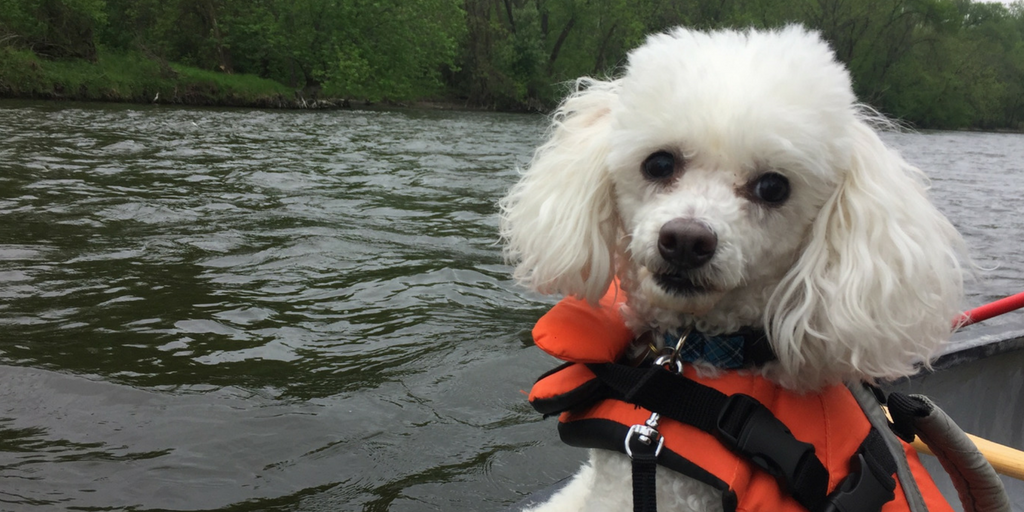
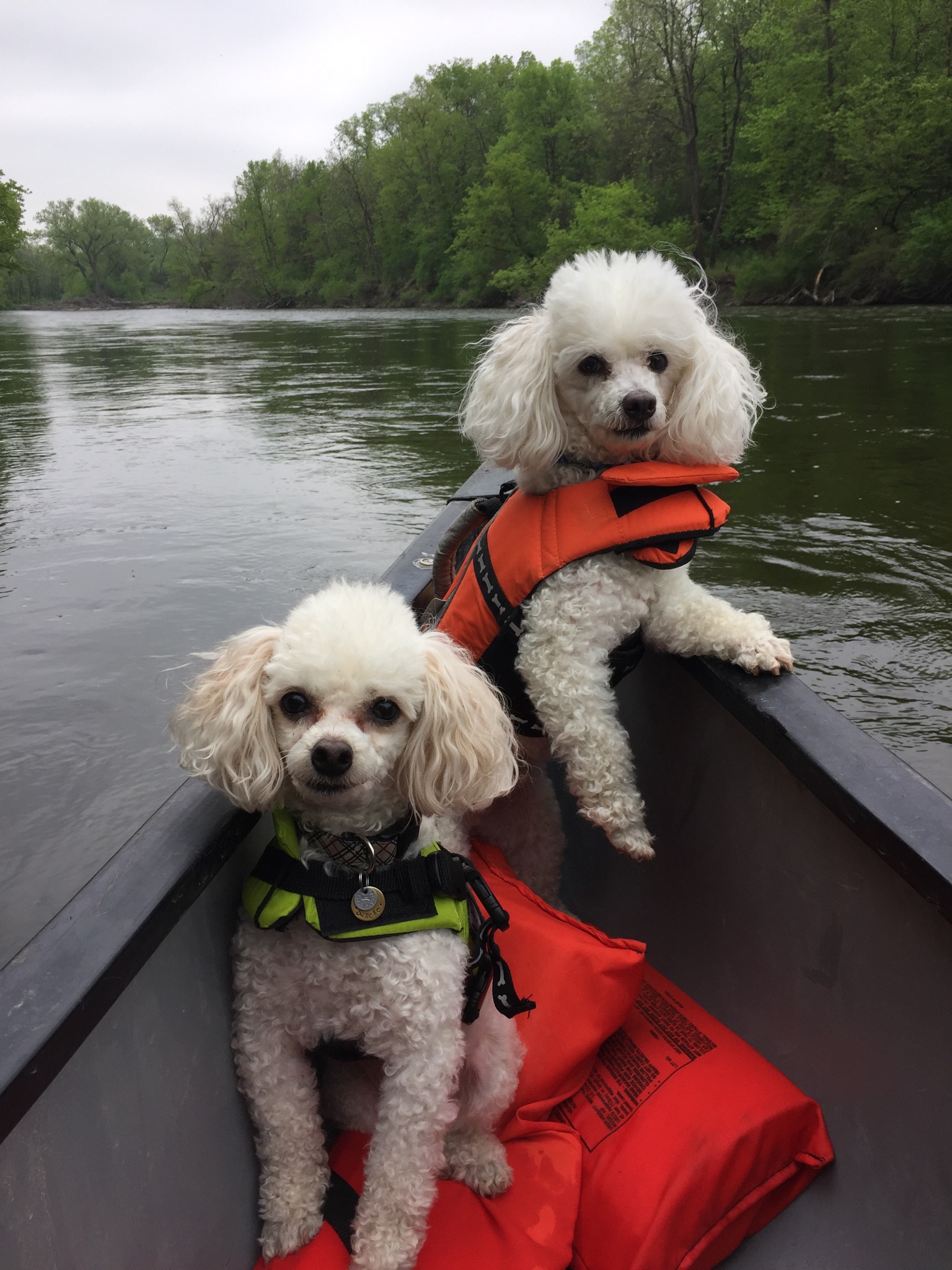
Maybe it was an instinctual calling after months of hibernation and mountains of snow? Or maybe it was my body craving a physical challenge as it slowly regained strength? Maybe it was just an excuse to put my dogs in their adorable life vests?

This urge contradicted every precaution I’ve taken every day for the past three years. I imagined how many ways canoeing could go wrong:

  • The sun could trigger anaphylaxis and I would need an emergency airlift. The helicopter pilot would find me by following the trail of vomit floating down the river.
  • My arms could dislocate or lose all muscle strength. I would lose control of canoe and end up floating into the Mississippi River. Maybe the Gulf of Mexico.
  • A bee or a swarm of mosquitos could attack me and trigger anaphylaxis. Another river of vomit; another airlift.
  • I might fall in, have trouble breathing, and depend on my two toy poodles to swim me to shore. Except they are toy poodles, so obviously we’d end up in the Gulf of Mexico.
  • Everything could go well, but I might lose all energy right before I needed to drive back to the city. I have no idea how much that Uber would cost.

I did not feel confident.

The urge continued to nag, “You really need to update your Facebook photos. Think of how cute your poodles will look!”

So, I texted a friend, “Do you want to go canoeing?”

I waited for her to tell me it’s a horrible idea.

“Sure,” she said, because I have supportive friends that let me test my horrible ideas.

So, I picked a 4-foot-deep river and a cloudy day.

Perched on the bow, I felt a bit more confident, like an explorer, brandishing my paddle. I only dropped it once. The river, aside from a few mild rapids, gently guided us down stream. Basically, we floated the whole two hours. Our only real job was not to make any sudden movements and tip the boat.

My only source of anxiety during the trip was when one of my poodles tried to fight a bald eagle. Quixote, who is 9 pounds and cowers at geese, had no reservations about barking and lunging at a bald eagle swooping increasingly closer to our boat. I imagine the eagle was ultimately dissuaded by his blaze orange life vest, completely validating the hour I spent digging the vest out of storage.

When we reached the landing, I leaped out of the boat and dragged it onto the shore declaring my victory. I was alive. I did the thing. My friend congratulated me on an uneventful voyage, but only I could truly appreciate what I had achieved. I knew my accomplishment could be attributed to luck (the weather was absolutely perfect) as much as determination (months of painful rehabilitation). But most importantly, it was about conquering fear.

And my Facebook photos got so many likes.

IMG_9247

Summer essentials for MCAS and EDS warriors

Blog post: The Histamine Bucket and other MCAS analogies

Minnesotans have a deep appreciation of summer. It is the reward for surviving blizzards and subzero mornings. As soon as the trees begin to bloom, we magnetize to our celebrated lakes for barbeques, swimming, and boating.

Too bad my mast cells hate summer.

Specifically, my mast cells hate the sun, the heat, and humidity. Fifteen minutes in the sun can trigger six hours of fever and vomiting. My mast cells hate the winter too, but that was easier to accept. The only fun aspect of living like a vampire is being able to say you live like a vampire. And to be honest, that hasn’t made me many friends.

This summer, overall my health is more stable, but my joints are not. It seems now that I’m less inflammed, my hypermobility is more noticeable. Like many MCAS patients, I also struggle with Ehlers-Danlos Syndrome (EDS). My mast cells are tolerating a more active lifestyle, but now my joints, especially my ribs, are slipping all over.

This year, I am determined to enjoy my summer anyway, even if that means getting up before sunrise. I’ve even assembled a survival kit of sorts. Here are the top five essentials I rely on to enjoy summer despite MCAS and EDS:

A cute hat

Emphasis on cute, because you should love your hat enough to wear it at all times. I have a huge head, so I’m a fan of straw, bucket hats, but UV protection hats are best. I am also a big fan of having multiple cute hats.

A fanny pack

Fanny packs are back! This is great for two reasons. First, they are perfect for carrying Epi Pens. I no longer fear a severe reaction when I walk my dogs, but I know one pissed off bee could put me in instant danger. Second, fanny packs easier to carry than most bags, meaning less joint problems . I’ve been eyeing this Lululemon bag.

Birkenstock insoles

Everyone has heard of Birkenstocks, but people rarely know about Birkenstock’s insoles. I actually find the insoles more comfortable. They provide both arch and metatarsal support and slide easily into any shoes. I can’t imagine my walks around lakes without them!

Zero gravity chair

When I asked other EDS warriors about patio furniture, the response was unanimous. I got mine from Target and it’s amazing. When my friend tried it, I worried she’d never leave. Perfect for outdoor reading, recovering, or wasting time on Facebook.

Signature (non-alcoholic) cocktail

Okay, it’s not really a cocktail at all, but this summer I’m observing happy hour. Every afternoon, when I slurpy my icy, mast cell stabilizing drink, I feel more summery. Your drink can be whatever you want. Here’s what’s in mine:

  • ½ cup frozen blueberries
  • ¼ cup raspberries
  • ¼ cup pomegranate juice (mast cell stabilizer)
  • ¼ cup lactose free Organic Valley 2% milk (easy to substitute)

IMG_8920

Wishing you an enjoyable summer! What’s your favorite summer essential?