The ice age of MCAS testing 

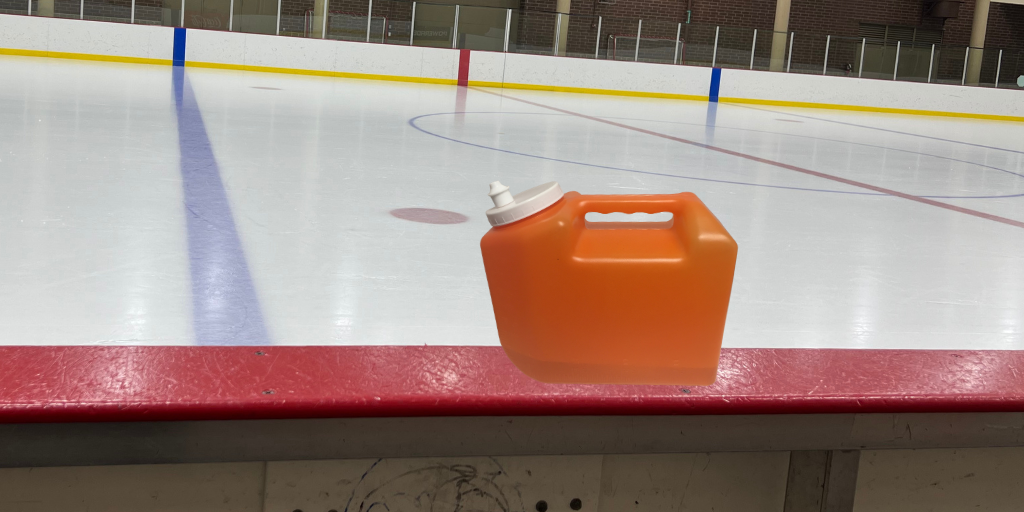
MCAS pee jug at an ice arena

Most skaters daydream about going to Olympics, landing their hardest jump, or skating the perfect program.

I daydream about turning the ice rink into MCAS testing facility.

The idea began when I realized the ice arena was too cold for my Epi Pen and steroid injection for adrenal insufficiency. As various cases and containers failed to keep my meds warm, I flashed back to the MCAS Pee Cooler of 2015. 

Mast cell activation syndrome (MCAS) testing is a rite of passage. Not only do you have to collect every droplet of urine for 24 hours, but you have keep it cold AT ALL TIMES. MCAS patients have higher levels of certain chemicals in their blood and urine, but these chemicals are extremely heat sensitive and degrade quickly. (On the positive side, thank goodness the chemicals do degrade or else we all might be dead from mast cell activation.)

Desperate for a diagnosis, I raced my pee from the toilet to the refrigerator knowing every second at room temperature risked a wasted test. At night, I worried I had added the new warm pee to the old cold pee too quickly and destroyed the specimen. The next day, my MCAS inflamed shoulder nearly dislocated hauling my pee in an ice-packed cooler to the clinic. Then I begged the nurse, who was not familiar with the test, to take care of my VIP. 

No matter how diligent a patient is, all lab hope is lost if a nurse doesn’t put the blood or urine sample on ice immediately.

Which leads to my daydream:

An ice arena is the perfect place to collect blood and pee for MCAS testing.

Before you yell ew, just know we’re already peeing and bleeding on the ice anyway. Although I no longer suffer from interstitial cystitis thanks to MCAS treatment, my bladder is still vulnerable to blunt force. A figure skating coach assured me, “Everyone pees at some point. It’s inevitable.”

Don’t even get me started on hockey players.

Technically, the samples wouldn’t have to be taken on the rink, since the entire arena is cold, but in my daydream nurses assemble pop up ice houses for privacy, which honestly are more accessible than half of the bathrooms I’ve used in clinics. 

My daydreams are fiscally responsible, so the test sessions would need to be group events, perhaps marketed as a MCAS lock-in party with entertainment, support groups, and prizes. 

The details about food and keeping everyone from triggering each other are bit hazy, but one thing is for sure–at the end of the 24 hours, an ice cream truck would arrive.

The delivery person would hand out an assortment of allergy friendly ice cream, while the nurse loaded the samples into the temperature controlled truck to be driven to the laboratory.


It’s been 8 years since I’ve been diagnosed with MCAS and testing hasn’t gotten any easier. The only thing that’s changed is our awareness of how unreliable the tests can be.

Unfortunately, the solution is much more complicated that skating rinks and ice cream trucks. Even if the physician orders the tests, the patient follows the instructions, and the clinic ships the test perfectly, laboratories often do not handle the samples properly. Most lab staff are unfamiliar with MCAS. This is why seeing a MCAS specialist who has established a relationship with laboratory staff to ensure proper handling can be so valuable.

Even if we did have reliable test, we don’t fully understand mast cell mediators or how to measure them. To be fair, the first case studies on MCAS were published in 2007. Research takes time and money.

In the meantime, more doctors are learning how to clinically evaluate for MCAS and identify when treatment trials are warranted. My positive tests provided proof of my diagnosis and disabilities (which swayed some skeptical medical providers), but in the end, access to treatment was most important. Treatment changed my quality of life, not some lab results that researchers can’t agree on how to interpret. I dream of a day MCAS patients don’t have to put their pee in their refrigerators for concrete validation, but for now, I hope we can continue to make more people feel better. 

Note: This post’s photo is absolutely photoshopped. I hope my days of carrying a pee jug in public ended years ago.  

Although specimen collection as soon as possible following an acute flare of symptoms is ideal, there is no need to wait for such an event when initially assessing the patient with longstanding baseline symptoms consistent with aberrant MC mediator release. However, if the initial laboratory assessment in a patient with a history suspicious for MCAD is negative, repeat testing is usually warranted but preferably should be deferred until the presentation of an acute flare.

– Afrin LB, Molderings GJ. A concise, practical guide to diagnostic assessment for mast cell activation disease. World J Hematol 2014; 3(1): 1-17 [DOI: 10.5315/wjh.v3.i1.1]

Related posts

Mast cells on ice 

Ice skater in a pink dress

This week, I am celebrating TWO YEARS of mast cell activation syndrome (MCAS) remission. Most of my fellow skaters have no idea how terrible and scary my MCAS symptoms were from 2015-2021. They don’t understand how impossible skating was for me before remission. I look “normal” aside from my steady bursts of humor and wiggles.

Note: Competitive skaters with less severe mast cell activation (MCAS) symptoms do exist. I’ve met several of them! MCAS symptoms can range from discomfort to disability. My remission is incredible is because of the severity of my illness despite years of proper treatment. Many doctors gave up on me. I was told I would likely never be able to use stairs, let alone compete in athletics. 

I never want to take my remission for granted. I never want to forget how without treatment, MCAS complicated every aspect of my life: eating, moving, sleeping, socializing, and breathing. Some people keep a gratitude journal; others do daily meditations. 

I practice gratitude by counting the ways my pre-remission mast cells would have tried to kill me every time I walk into a skating competition.


First, assuming I could tolerate the usual fragrance (perfume, shampoo, detergent, deodorant, etc.) of a public event, one whiff of hairspray would swell my throat before I could set my skate bag down.

For me, this usually wouldn’t require a stab in the leg, a ride in a fancy taxi, and an expensive hospital bill with a side of medical gaslighting. (Like many MCAS patients, I haven’t had to use an EpiPen, but I definitely carry one.)

Hopefully, I would be able to force pills down my throat and play the game: should I stay or should I go?!

Obviously, fleeing toxic air is always a good idea. 

Why would I stay? To overcome my disability and skate anyway? Absolutely not.

I would stay because of the bathroom, projectile vomit, and uncontrollable pooping. I don’t like squirming out of my skating dress on a good day, so I can’t imagine doing so in a full body rash. Best case scenario: I empty my guts and someone drives me home where I recover for three days. 

Okay, so let’s pretend I got a disability accommodation to prohibit hairspray inside the arena and nobody smells like MCAS death. 

My mast cells don’t like the cold. Once inside the arena, my mast cells would begin pumping chemicals into my blood–dilating and permeating my vessels. This can trigger poor circulation, dizziness, and weakness–a recipe for skating disaster. My numb, tremoring hands would likely need help tying my skating.

So why not just warm up? Well, my mast cells don’t like that either. Just a few off-ice waltz jumps would be enough to the ignite the inflammatory process–pushing my lungs, heart, and brain into overdrive and destabilizing my hips and feet. 

As my body would swell, every rhinestone on my dress would be at risk of spontaneous ejection. Other skaters would attribute in my urgent and incessant need to pee to performance anxiety, when really histamine would be inflaming my bladder and literally making it smaller. In bathroom mirror, bright red rashes would outline my dress as my skin reacted to the synthetic fabric–definitely not the pretty lines Griffies aspires to. 

No matter the temperature, I would be spinning before I got on the ice. 


This where my gratitude practice ends. 

Don’t worry–when I check in with the rink attendant, I stop envisioning my demise.

When step on the ice, I don’t think about my mast cells at all. I take a deep breath and my body swells… with gratitude.

Finding my balance

Figure skater posing on frozen lake

On December 22, I celebrated 7 years of MCAS diagnosis. Yes, I say celebrated, because getting a diagnosis in 2015 was almost unheard of and without it, I wouldn’t have been able to advocate for myself and get treatment.

This is how I describe the past 7 years:  

  • 2016: Total destruction and despair
  • 2017: Renovating my life
  • 2018: Building a support system
  • 2019: Survival and self-advocacy
  • 2020: Dreaming again
  • 2021: Adventure and feeling
  • 2022: Finding my balance

Please note: the majority of MCAS journeys are not this extreme. Many people with MCAS are undiagnosed because their symptoms are not severe.

My 2022 holiday card

Remission has been interesting to navigate. Sometimes I catch myself subconsciously living like I am still controlled by MCAS. For example, for 5 years, I didn’t have enough vacation time to even consider taking the time off between Christmas and New Year’s; all my paid time was spent on MCAS reactions. Last week, after receiving my 9th auto response from a coworker, I seriously had to reassess my choices. I no longer need to fear going to losing my job because I want to spend two days relaxing and eating cheese. 

Last year, I had an unsatiable desire for adventure–not knowing what I liked or how long my remission would last. This year, the urgency subsided (but not my gratitude!). Instead of chasing adventure, I took pleasure in building habits. Until remission, my mast cells never permitted routine.

I did literally work on finding my balance: scratch, camel, and sit spins. However, the hardest work was learning how to balance adrenal insufficiency (a life-threatening complication of MCAS) and my newfound love of athletics. Although I’ve met plenty of competitive skaters with MCAS, I have yet to meet another competitive skater with adrenal insufficiency, because exercise requires cortisol. A few ruthless adrenal crises reminded me: even though my body CAN go longer, faster, or higher, it doesn’t mean I should. I need to really WANT to do the thing. And then stress dose accordingly. 

Speaking of stress dosing, isolation is terrible, but this year, I re-learned that human interaction is really complicated. It’s easier to set boundaries when you’re deathly allergic to people. Other people’s expectations are especially rampant in the figure skating world. You can’t go a day without hearing “axel” and “Olympics.” Meanwhile, I’m sliding around in a pumpkin costume, most interested in “joy.”

Two weeks ago, I found myself skiing 7” of wet, heavy snow, being chased by a professional race coach yelling, “Right, left, right.” My trembling muscles warned me this would not end well, but I told myself to be grateful for this unexpected private instruction. I did not feel grateful a few days later hugging my toilet in adrenal crisis and vomiting so hard brain juice shot out my old CSF leak. 

Remission or not, life is messy. I’m not making any New Year’s resolutions because I’m not pretending to be in control. Joy is my compass, gratitude is my motivator, and humor is my Band-Aid for when I inevitably get my ass kicked.


In case you missed it, on October 30, I had the pleasure of reconnecting with Dr. Afrin, my MCAS specialist from 2015-2017, in a live MCAS Q & A hosted by Mast Cell Research. Watch the recording.

And thank you to my Patreon supporters for keeping this blog going during 2022!